Barnabas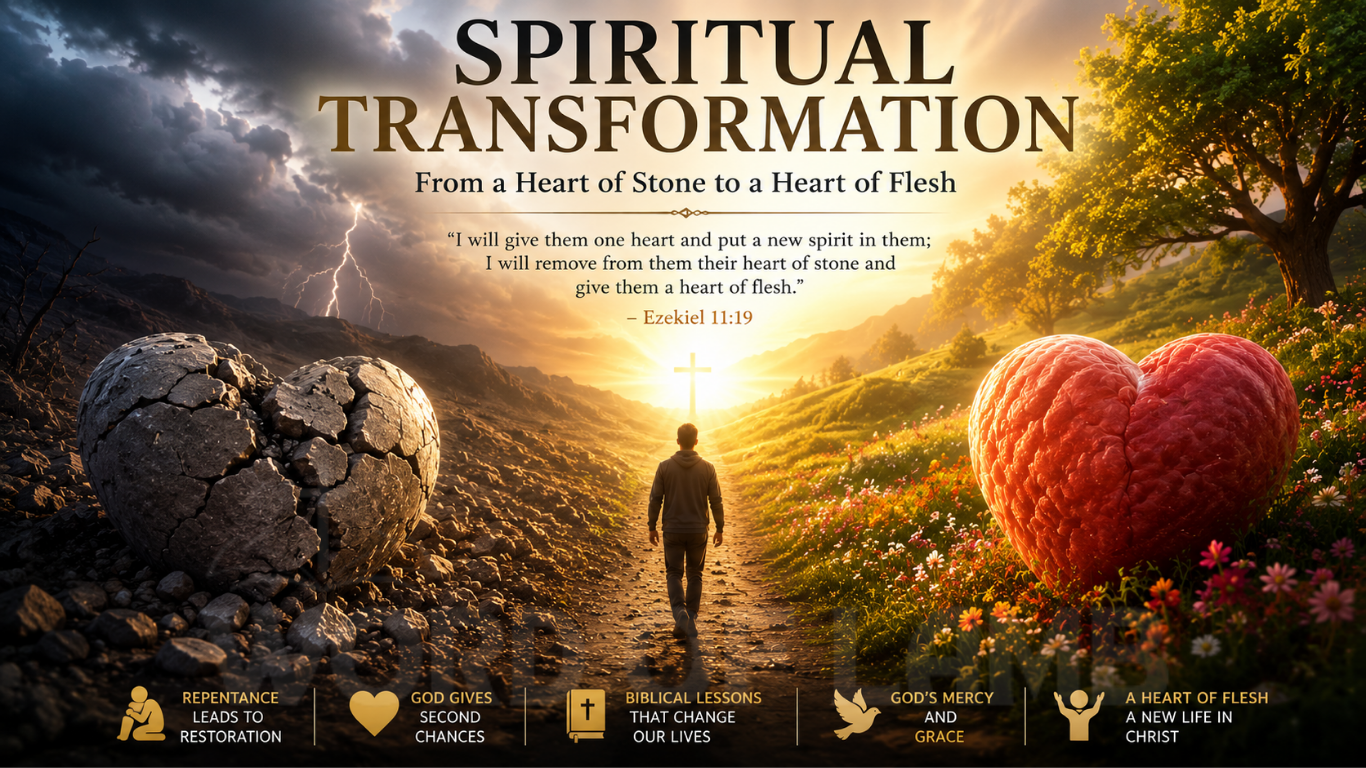
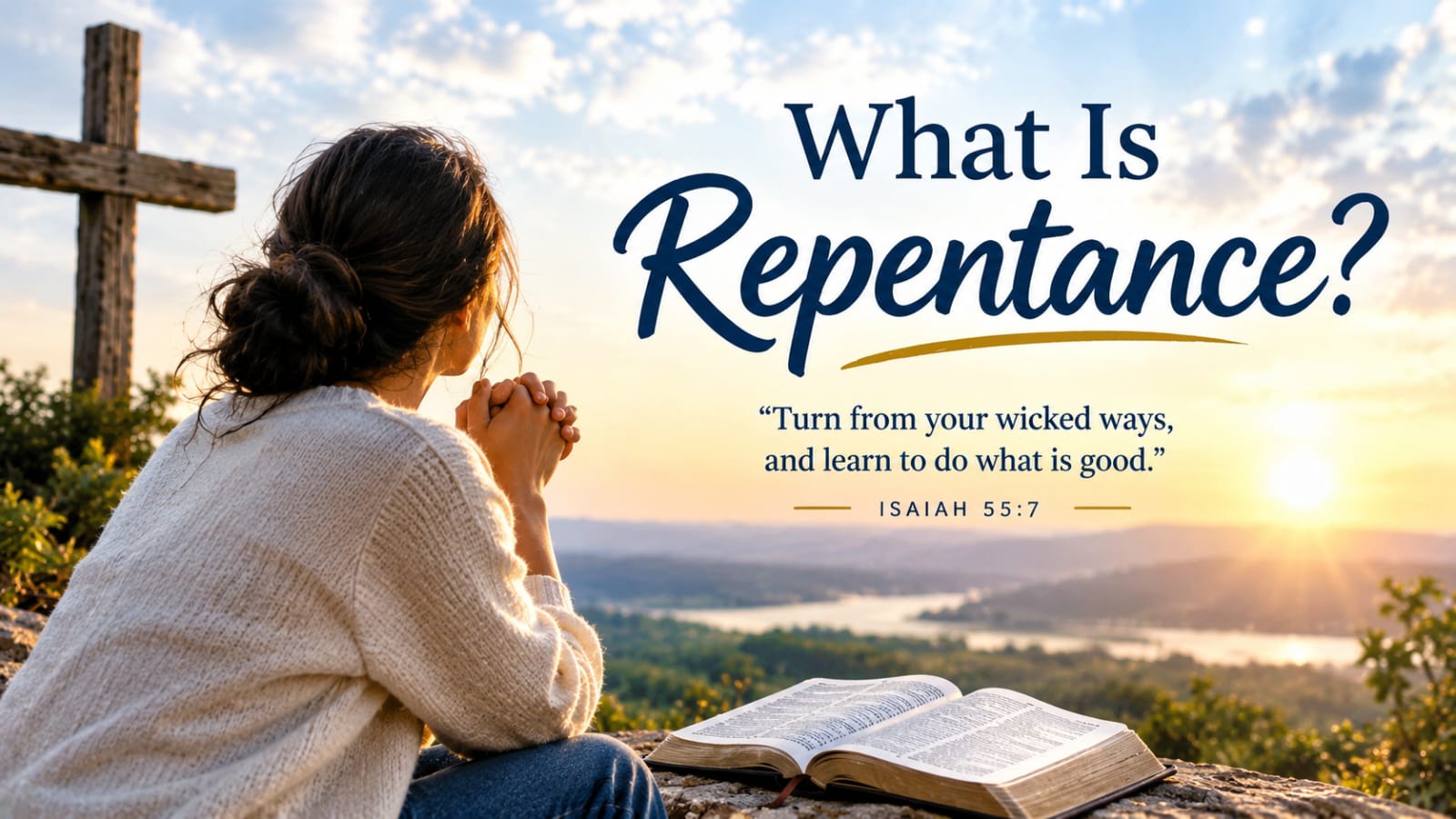
Spiritual Transformation begins when a person is willing to recognize their wrongs, listen to God’s correction, and turn back to Him. Even when God’s people fall, He often gives them an opportunity to correct their lives and return to the right path. But when people refuse to change and continue to harden their hearts, they can eventually destroy their own lives.
God desires to take our heart of stone and give us a heart of flesh. This is the heart of true Spiritual Transformation.
The Bible gives us many powerful examples of people who corrected their lives and others who refused to change. These stories teach us about repentance, obedience to God, God’s mercy and grace, and the consequences of sin in the Bible. Let us look at these lessons from Bible characters and understand what happens when a person chooses to change and what happens when they refuse.
1. Naaman and Gehazi: Obedience Brings Healing
During the time of the prophet Elisha, Naaman, the commander of the Syrian army, suffered from leprosy. When he came to the prophet seeking healing, Elisha told him to go and wash himself seven times in the Jordan River.
At first, Naaman became angry. He was offended by the instruction and was about to leave. But one of his servants spoke to him and encouraged him to follow the prophet’s words.
Naaman listened. He humbled himself, went to the Jordan River, and dipped himself seven times.
The angry Naaman corrected himself. He obeyed the instruction and received healing. His flesh became like the flesh of a little child.
Naaman experienced Spiritual Transformation because he was willing to humble himself and obey.
But Gehazi, who served alongside the prophet Elisha, did not correct the greed in his heart. He had witnessed Elisha’s selflessness, but he refused to change himself. Because of his greed, the leprosy that had left Naaman came upon Gehazi and his descendants.
Naaman, a Gentile, corrected himself and received healing. Gehazi, who served God’s prophet, refused to correct himself and suffered the consequences.
Dear believer, when we correct our ways, God can bring freedom from the chains that bind us. But when we refuse to change, we can remain trapped in the very things God wants to remove from our lives.
2. Hagar and Lot’s Wife: Turning Back or Looking Back
Hagar, Sarah’s servant, ran away because of the hardship she experienced from her mistress. While she was near a spring of water on the road to Shur, an angel of the Lord spoke to her.
The angel told Hagar to return and submit herself to her mistress, Sarah. Hagar listened to the word she received. She corrected her course and returned.
Hagar had gone in the wrong direction, but she was willing to change. This was an important step toward Spiritual Transformation in her life.
Lot and his family were also in danger when the angels came to rescue them from the destruction of Sodom. They were told not to look back but to escape for their lives.
Lot’s wife, however, looked back. She did not correct herself or obey the instruction she had received. As a result, she became a pillar of salt and lost her life.
The difference between Hagar and Lot’s wife teaches us an important lesson about a hard heart vs. soft heart. One person listened and turned back. The other refused to obey.
Dear believer, even if you have gone astray, God still gives you an opportunity for Spiritual Transformation. When we turn back to God and listen to His voice, we can still experience His blessing.
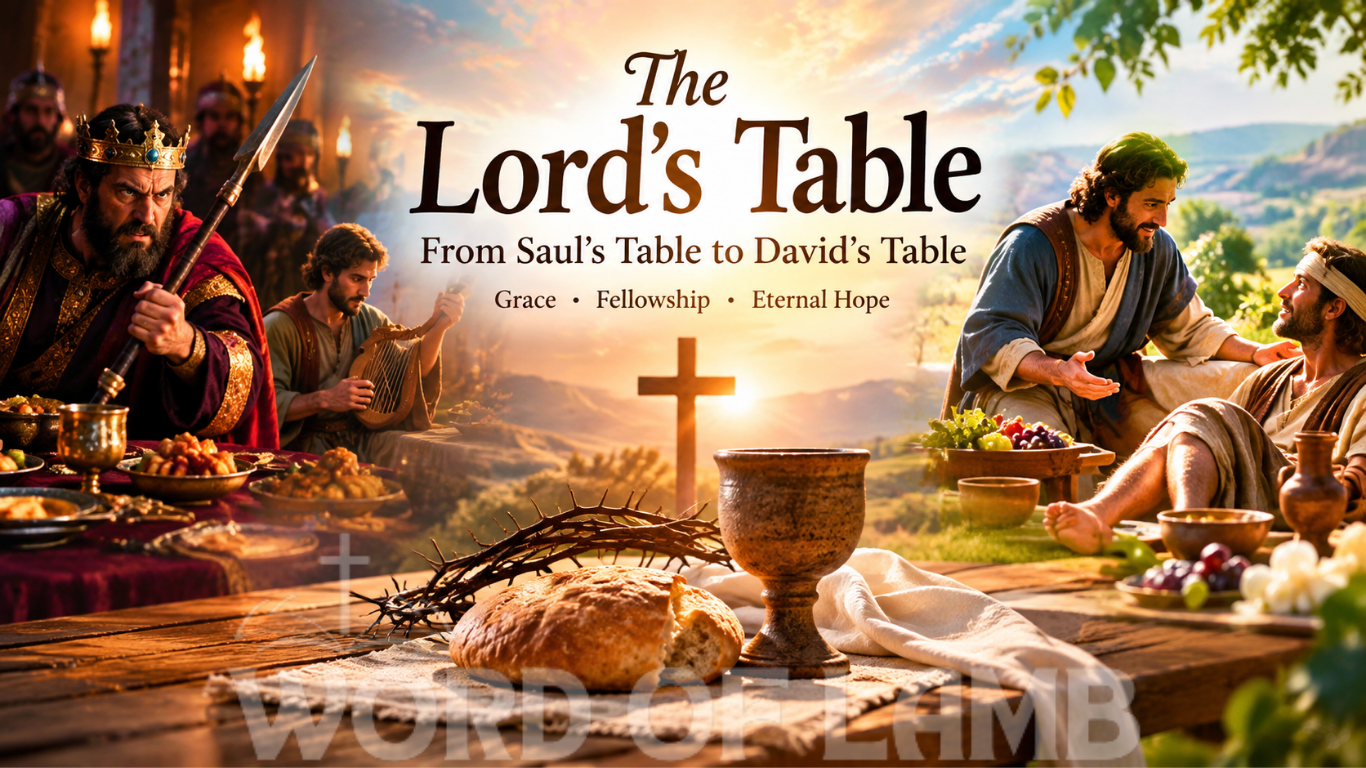
3. David and Saul: Repentance Leads to Restoration
2 Samuel 12:9–13; Psalm 51; 1 Samuel 15
David was a man who looked toward God. Yet there came a time when he stopped looking upward and looked down from the roof of his palace. He fell into sin.
But when the prophet Nathan confronted David and exposed his sin, David did not harden his heart. He acknowledged his wrongdoing and repented.
His broken heart is beautifully expressed in Psalm 51.
David fell, but he did not remain in darkness. He repented, corrected his life, and rose again. His repentance led to restoration, and he continued to be a light in Israel.
This is one of the clearest biblical examples of repentance and Spiritual Transformation.
King Saul, however, refused to correct himself. He became jealous when the women praised David more highly than they praised him. He also disobeyed God’s commands and attempted to justify his actions.
When Samuel confronted him, Saul did not truly change his heart. He continued in disobedience.
In the end, Saul fell on his own sword and died.
David fell, but he repented and rose again. Saul fell, but he refused to change.
Dear believer, even if you have fallen, do not remain on the ground. Rise like David. Do not continue in the stubbornness of Saul. God gives second chances, but we must be willing to respond when He corrects us.
4. The Pharisees, Tax Collectors, and Sinners. The Call to Spiritual Transformation
Mark 2:14; Luke 15:7; Luke 19:8
When tax collectors and sinners came to Jesus, many of them acknowledged their wrongs and changed their lives.
Levi, the son of Alphaeus, was sitting at the tax booth when Jesus said, “Follow Me.” Levi got up and followed Him.
The tax collector corrected his life and began following the Lord.
The sinful woman who came to Jesus also received His words and changed her life. The Samaritan woman acknowledged her past and turned away from her old ways. Zacchaeus recognized his wrongdoing and promised to make things right with those he had cheated.
These are Bible characters who repented and experienced Spiritual Transformation.
But the Pharisees refused to correct themselves. They saw Jesus, heard His teaching, and witnessed His works, yet they continued to harden their hearts.
Jesus said there is joy in heaven over one sinner who repents.
God is not looking for people who pretend they have never fallen. He is looking for hearts that are willing to repent, change, and turn back to Him.

5. Peter and Judas Iscariot: Two Disciples, Two Different Spiritual Transformation
Peter, one of Jesus’ disciples, denied knowing the Lord three times.
But when the Lord looked at Peter, Peter realized what he had done. He went outside and wept bitterly.
Peter repented. He corrected himself and returned to the Lord.
Judas Iscariot was also one of Jesus’ disciples, but he could not escape the greed in his heart. He was given opportunities to change, yet he continued to follow the desires that controlled him.
In the end, Judas took his own life.
The difference between Peter and Judas was not that one had never failed. Both failed. The difference was how they responded after failure.
Peter turned back. Judas did not.
This is a powerful lesson about God’s mercy and grace. Spiritual Transformation does not mean that a person has never fallen. It means that, after falling, they are willing to repent and return to God.
Dear believer, if you have fallen like Peter, rise again. Do not remain trapped in the chains of sin.
6. The First Thief and the Second Thief, Choosing Spiritual Transformation
When Jesus Christ was crucified, two thieves were hanging on crosses on either side of Him.
At first, both of them mocked and insulted Jesus. But the first thief eventually saw Jesus differently. He recognized that Jesus had done nothing wrong and acknowledged his own condition.
He said, “Jesus, remember me when You come into Your kingdom.”
Jesus answered him, “Today you will be with Me in Paradise.”
The first thief corrected himself and entered Paradise with Jesus.
The second thief, however, remained hard-hearted. Even after hearing Jesus’ words, he refused to change.
This is a powerful picture of Spiritual Transformation. One thief changed his heart at the very end of his life, while the other remained stubborn.
Dear believer, in many ways, we can also become thieves. We may steal the praise that belongs to God. We may steal the time that should be given to God. We may fail to give God what belongs to Him.
But when we recognize our wrongs, repent, and turn back to God, His mercy is available.
7. The Centurion, the Soldiers, and the Chief Priests
When Jesus was crucified, the Roman soldiers and the centurion had taken part in binding Him, beating Him, mocking Him, and humiliating Him.
But when Jesus died and the soldiers witnessed the things that happened, the centurion recognized the truth about Him. He said, “Certainly this man was righteous,” and glorified God.
The soldiers and the centurion came to recognize who Jesus truly was. Their hearts changed.
But the chief priests, who had handed Jesus over to be crucified, did not correct themselves. Their hearts remained hard.
The rocks were broken. The tombs were opened. But the hearts of the chief priests remained closed.
This is another powerful lesson about Spiritual Transformation. The Roman soldiers had treated Jesus harshly, yet they came to recognize the truth. The chief priests knew the Scriptures, yet they refused to change.
Spiritual knowledge alone is not enough. Our hearts must be willing to respond to God.
Let God Give You a New Heart
The Bible gives us many powerful lessons about Spiritual Transformation. Naaman corrected himself and received healing. Hagar listened and returned. David repented and was restored. Peter wept and came back to Jesus. The first thief believed and entered Paradise. The soldiers recognized the truth and glorified God.
But Gehazi, Lot’s wife, Saul, Judas, the second thief, and the chief priests refused to correct themselves and suffered the consequences of their choices.
These are important lessons from Bible characters. Those who correct their ways can experience God’s mercy, while those who refuse to change may continue carrying the painful consequences of their decisions.
Dear believer, if you have fallen, do not remain on the ground. If your heart has become hard, do not continue in that condition.
Harden not your heart when God speaks to you.
God is still calling you back. He is still giving you an opportunity to repent. He is still offering God’s mercy and grace. He can take away your heart of stone and give you a heart of flesh.
This is the heart of Spiritual Transformation.
So, turn back to God. Correct your ways. Repent and rise again.
The Bible teaches us that whoever conceals their sins will not prosper, but whoever confesses and forsakes them will find mercy.
Spiritual Transformation begins when we stop making excuses, acknowledge our wrongs, and surrender our hearts to God.
May the Lord change every heart of stone into a heart of flesh. May He help us correct our lives like Naaman, repent like David, return like Hagar, rise like Peter, believe like the first thief, and glorify Him like the centurion.
May God give each one of us the grace to experience Spiritual Transformation, walk in obedience, receive restoration, and live as a light for His glory.
Amen.