Barnabas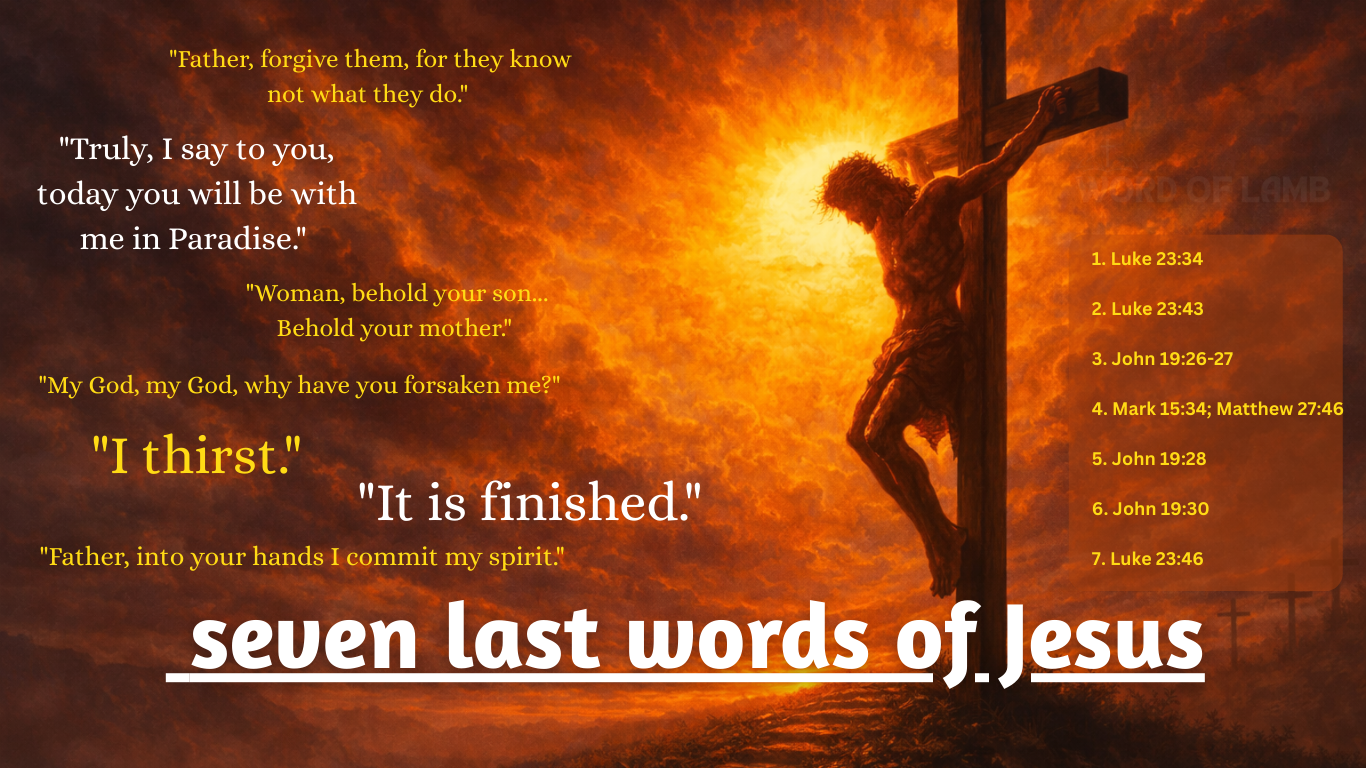
In every human life, final words hold profound emotional significance and remain deeply treasured in the hearts of those who hear them. Likewise, the seven last words of Jesus Christ on the cross have been reverently remembered by the world as sacred and life-giving truths. These seven sayings are called the “last words of Jesus on the cross.”
The final words of any person carry great value in life. Often, the future of the remaining family or community seems to rest upon the last words spoken by one who is about to die. Different individuals have expressed different opinions regarding last words.
Karl Marx, the social reformer, when asked by his disciples at the time of his death, “What are your last words?” replied, “Last words are for fools who have not yet said enough,” and thus rejected the very idea of last words.
P. T. Barnum said concerning last words, “Last words reveal the true inner character of a person.”
Napoleon, the great emperor, said his last words, saying, “There is nothing left for us in this world.”
Charles Spurgeon, the great Baptist preacher, declared in his last moments, “Jesus died for me.” ( He knew the value and love of the seven last words of Jesus Christ on the Cross)
John Wesley, the Methodist missionary, said in his final hour, “The best of all is, God is with us.”
Warren W. Wiersbe, the great writer, commenting on the last words of Christ, said, “The seven words of Christ are seven doors through which we behold His inner love.”
When we observe these opinions about last words, we understand that they carry immense significance. Likewise, the Lord Jesus Christ lived in this world for thirty-three and a half years. He taught all that was necessary for the salvation and well-being of humanity, performed mighty miracles, and for the redemption of all mankind, ascended the cross and shed His precious blood. While hanging on the cross, He spoke seven final words, called the seven last words of Jesus Christ. These seven sayings may be considered Christ’s message of comfort to His Church. They are as follows,
1. The first word of the seven last words of Jesus Christ
Luke 23:34 – Father, forgive them, for they do not know what they are doing.
From the Garden of Gethsemane until He was lifted upon the cross, the sufferings imposed upon Him by the Jews, the insults, the accusations, and the wounds inflicted upon His body were beyond measure. More painful than the nails, more grievous than the spear, more tormenting than the crown of thorns, was the cruelty they showed Him. Though He hung upon the cross in agony, that suffering was still less than the anguish of forgiving those who wronged Him.
Is it natural for a human being to say, “Forgive them”? Yet Christ spoke these words. Though He was God, He became man; and as a man, His body felt pain and His heart felt the sting of humiliation. Still, bearing that pain, He said, “Forgive them.”
If He had not forgiven them at that moment, He could not forgive us today. Even before ascending the cross, He taught five principles in His preaching. What a wonderful preaching from the cross, it’s the frist word of the seven last words of Jesus Christ on the cross
Love your enemies.
Do good to those who hate you.
Bless those who curse you.
Pray for those who mistreat you.
Forgive, as recorded in Luke 6:27–28 and in the other Gospels.
Which Christian can truly practice these five? Though many may not live out the first four, they at least pray, “Forgive us our debts, as we forgive our debtors.” But if we fail to practice what Christ commanded, what benefit is there? To speak of forgiveness without living it is like pouring perfume into ashes.
In these seven sayings, both the humanity and the divinity of Christ shine like twin pillars, stretching from the cross to the throne.
“Father… them… what they are doing… they do not know… forgive.”
To endure thirty-three and a half years of suffering is one thing; but the suffering contained in the word “forgive” is another. Hebrews 5:7 speaks of His loud cries and tears. All that agony is one measure; yet the agony within the word “forgive” is another. The day you forgive those who harm you is the day you gain victory, and your enemies are defeated.
2. The Second Word of the Seven Last Words of Jesus Christ
Luke 23:43 – Today you will be with Me in Paradise.
The second word of the seven last words of Jesus Christ tells us He will always be with us. This word concerns the thief on the cross who repented. He alone. Who was he? The Bible describes him as:
A criminal thief.
One who once mocked Christ.
One who rebuked the other thief.
One who bore witness that Christ had done nothing wrong.
One who entered salvation.
Pilate had testified, “I find no fault in Him.” The thief prayed, “Lord, remember me when You come into Your kingdom.” Some complain that their many prayers receive no answer. How many times did this thief pray? Once, he received an immediate answer.
He was transformed by observing Christ’s life and hearing His prayer. Likewise, how many are changed through our prayers and through the testimony of our lives? These two are important.
Hearing Christ say “Father,” the thief understood something profound. The Jews called God “Father”; Gentiles said “God.” Realising that Jesus called upon the heavenly Father even in suffering, he recognised Him as the Messiah. Seeing Christ forgive those who crucified Him, he gained courage, believing that even he could be forgiven.
By rebuking the other thief and by asking to be remembered in His kingdom, he demonstrated faith in Christ’s resurrection and future reign. If he had no hope of resurrection, why would he say, “When You come into Your kingdom”?
Christ came from heaven bringing salvation, and as He returned, He took a redeemed soul with Him. He came as Saviour, declared Himself as Saviour, saved, and carried the saved one to Paradise. We can see his love in the seven last words of Jesus Christ.
3. The Third Word of the Seven Last Words of Jesus Christ
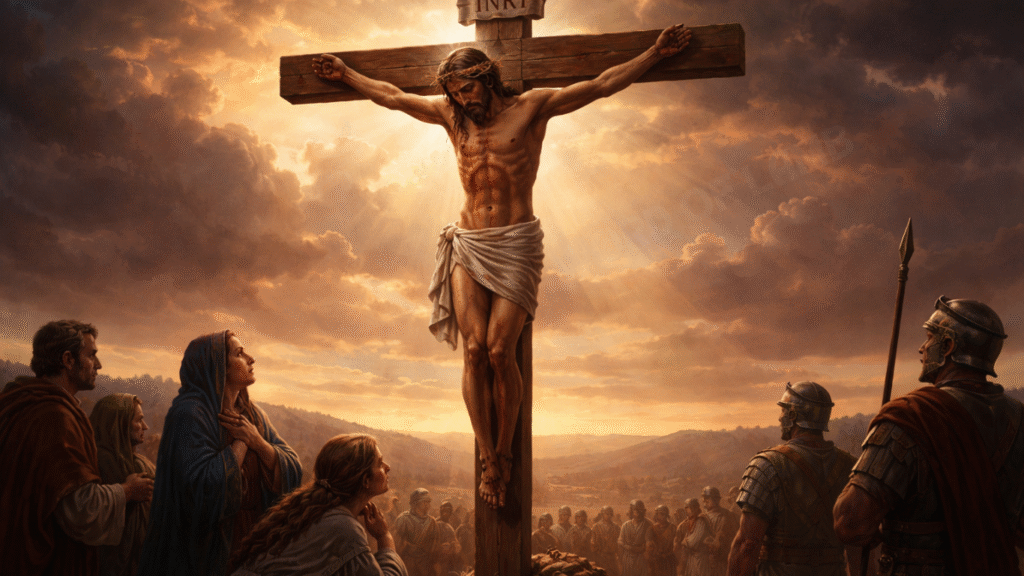
John 19:25–27 – Woman, behold your son (To John) Behold your mother.
First, He spoke to His mother. Then, to His disciple. He made provision for His mother’s care and entrusted her to the disciple whom He loved.
Though it is written that His own did not receive Him, here at the cross we see those who did receive Him—His mother and His beloved disciple. Even the repentant criminal was counted among His own through faith.
O Lord Jesus, You did not forget Your mother. You remembered the bonds of relationship. The thief was not Your relative, yet through faith and love, he became Your own. Likewise, through faith, we too are counted among Your family.
When you said “Father,” You looked upward. When You spoke to the thief, You looked beside You. When You addressed Your mother and disciple, You looked downward. We still remain on this earth. Until we come to You, keep Your eyes upon us. Just as You looked upon them, look upon us all our days. Speak words of comfort to us also.
4. The Fourth Word of the Seven Last Words of Jesus Christ
Matthew 27:45 – My God, My God, why have You forsaken Me?
If you were not fully human, you would not have cried these words. In this cry, you stood in the place of humanity. You did not say “My Father,” but “My God,” bearing the separation caused by sin. You descended from the throne of glory to stand among sinners. The depth of this suffering is beyond our understanding. You endured it not by divine power alone, but in Your humanity. For this, we offer endless gratitude.
5. TheFifth Word of the Seven Last Words of Jesus Christ
John 19:28 – “I thirst.”
In great agony, hanging upon the cross, He spoke of thirst. There is physical thirst, and there is the thirst of the heart.
Earlier, at Jacob’s well, He told the Samaritan woman, “Give Me a drink.” Yet His deeper thirst was that she might know the Messiah and receive living water. When she believed, and when her village believed, His thirst was satisfied.
On the cross, though His physical thirst was met with vinegar, His greater thirst was for souls. When we believe that He came, suffered, died, rose again, and will come again for us, we quench His thirst. To those who believe, He gives living water and eternal life.
The Sixth Word of the Seven Last Words of Jesus Christ
John 19:30 – It is finished.
From the pulpit of the cross on Calvary, He declared victory. The work given by the Father was completed. The powers of darkness were defeated. Satan, who thought he had triumphed by crucifying Christ, was himself crushed under Christ’s feet.
With the simple yet mighty words “It is finished,” the plan of redemption was fulfilled. The curse of sin, suffering, death, and hell was borne by Him. Salvation was accomplished in full. What remained was for humanity to receive the finished work.
Through this victory, authority was granted to His Church. The enemy was bound, and eternal glory was prepared for the redeemed. Among the seven last words of Jesus that He declared, “it is finished” stands as a victory proclamation
The Seventh Word of the Seven Last Words of Jesus Christ
Luke 23:46 Father, into Your hands I commit My spirit.
The first word on the cross addressed the Father, and the final word did the same. Throughout His life, He glorified the Father. Though in the fourth word it seemed He was forsaken, He was never truly abandoned.
Like a child placing a treasured possession into a mother’s hands and later receiving it again, Christ entrusted His spirit to the Father on Friday and took it up again in resurrection on Sunday. He has authority over death (John 10:18).
From the glory He had before the foundation of the world, He came; and to that glory He returned. By His death, He destroyed our death. Through His seven sayings on the cross, complete salvation was secured for humanity and complete defeat pronounced upon Satan.
Our Lord Jesus Christ died and rose again, defeating death and overcoming Satan. I pray that as you meditate on the Seven Last Words of Jesus, you will be truly blessed. May the Seven Last Words of Jesus help you grow spiritually and bring you closer to God each day. Amen.