Barnabas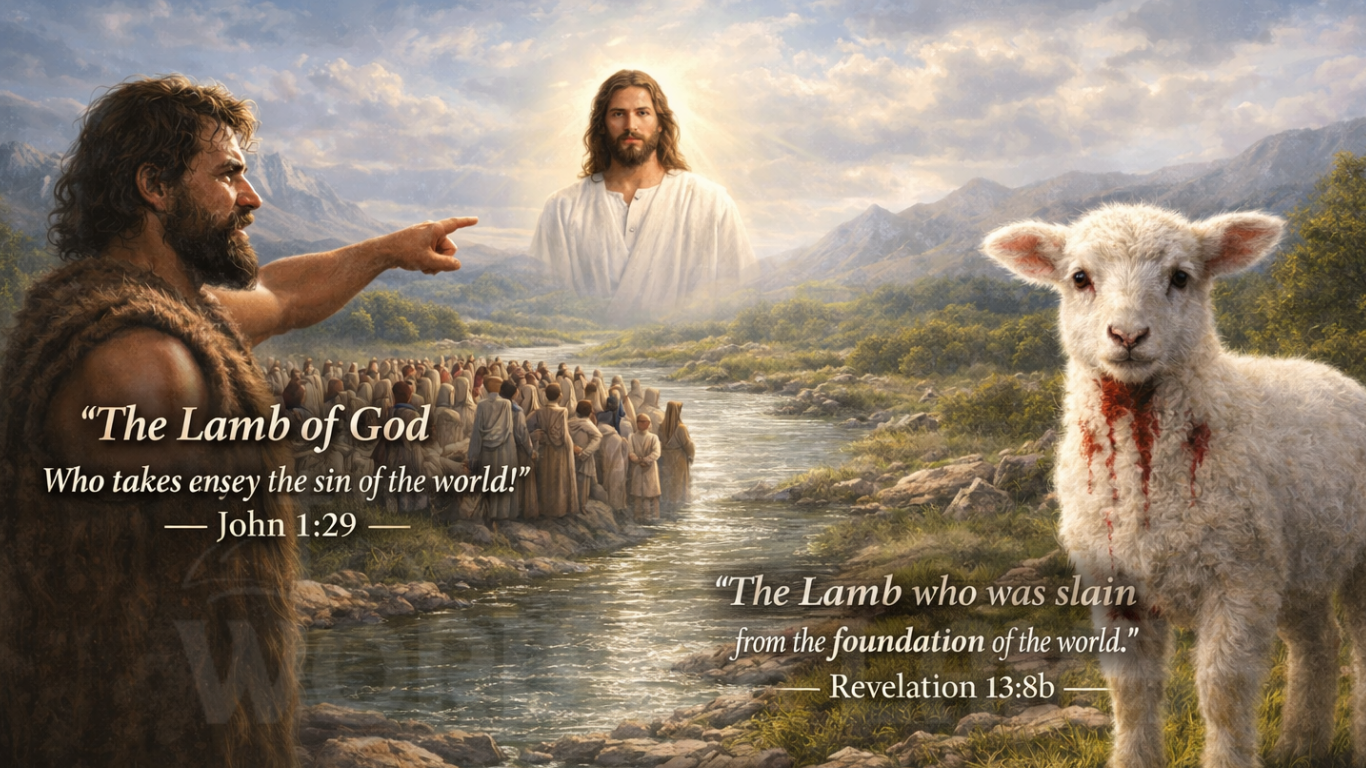
The Lamb of God Who Takes Away the Sin of the World. (John 1:29) John the Baptist, pointing to the Lord Jesus, declared to the Jews, “Behold, The Lamb of God who takes away the sin of the world”
In the divine vision recorded in Revelation 5:6, the Apostle John writes that he saw a Lamb standing as though it had been slain. This Lamb bore wounds, yet it had not fallen. It was not defeated. Instead, it stood firm. This reveals a powerful truth, despite suffering, the Lamb stood in silent victory. Its triumph is seen in its standing. Through that victory, this Lamb laid down its life for many. Let us reflect on a few sacrifices that point toward this truth revealed in John 1:29.
The Passover Lamb for Israel’s Deliverance (Exodus 12:6)
For the deliverance of the Israelites, a lamb was sacrificed. They were instructed to take a spotless, one-year-old male lamb from the sheep or goats. In the evening, they were to kill it, take some of its blood, and apply it to the doorposts and lintels of their houses. That night, they were to eat the roasted meat with unleavened bread and bitter herbs.
This sacrifice protected the firstborn of Israel. If the lamb had not been slain, the firstborn would have perished. The death of the lamb brought life and deliverance to the people.
In the same way, as revealed in John 1:29, Jesus, the spotless and blameless Lamb, was sacrificed for the redemption of sinful humanity. Just as the blood of the lamb caused the destroyer to pass over the Israelites, the blood of Jesus brings salvation and protection from eternal death.
The innocent lamb gave its life so that others might live. Likewise, Jesus, the Lamb of God in John 1:29, gave His life so that humanity might be redeemed.
The Lamb for Atonement of Sin (Leviticus 16:9)
Aaron was commanded to bring a goat upon which the lot fell for the Lord and offer it as a sin offering. Its blood was taken inside the veil and sprinkled on and before the mercy seat to make atonement for the sins of the people.
This act symbolized the cleansing of sin and reconciliation with God.
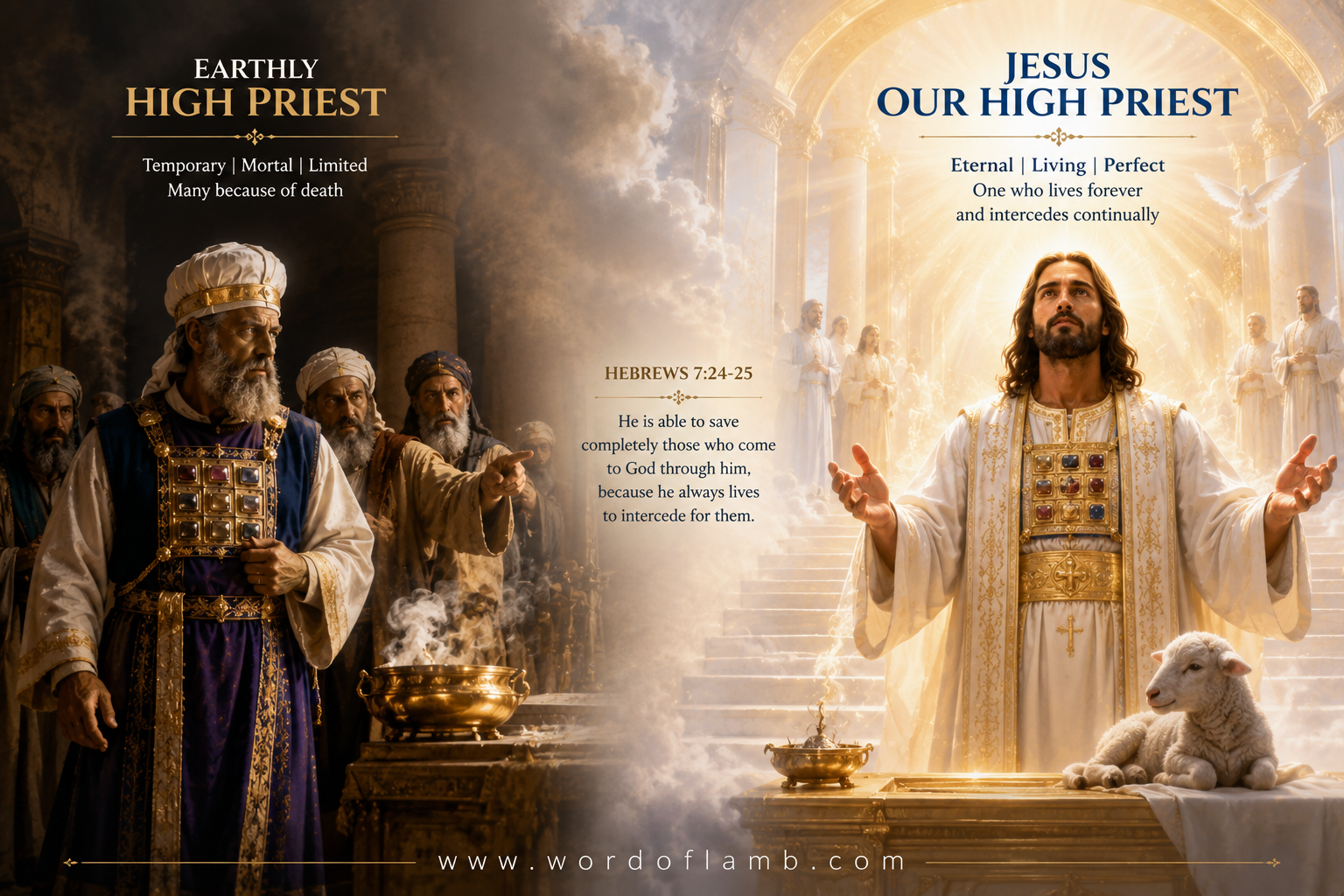
Hebrews 9:25 reminds us that Christ offered Himself as the ultimate sacrifice. Jesus became the atoning Lamb for our sins. The punishment we deserved, He bore. The wounds that should have been ours fell upon Him.
Isaiah 53:5 declares:
“He was wounded for our transgressions, He was bruised for our iniquities.”
The Lamb described in John 1:29 carried our sins so that we might receive forgiveness and restoration.
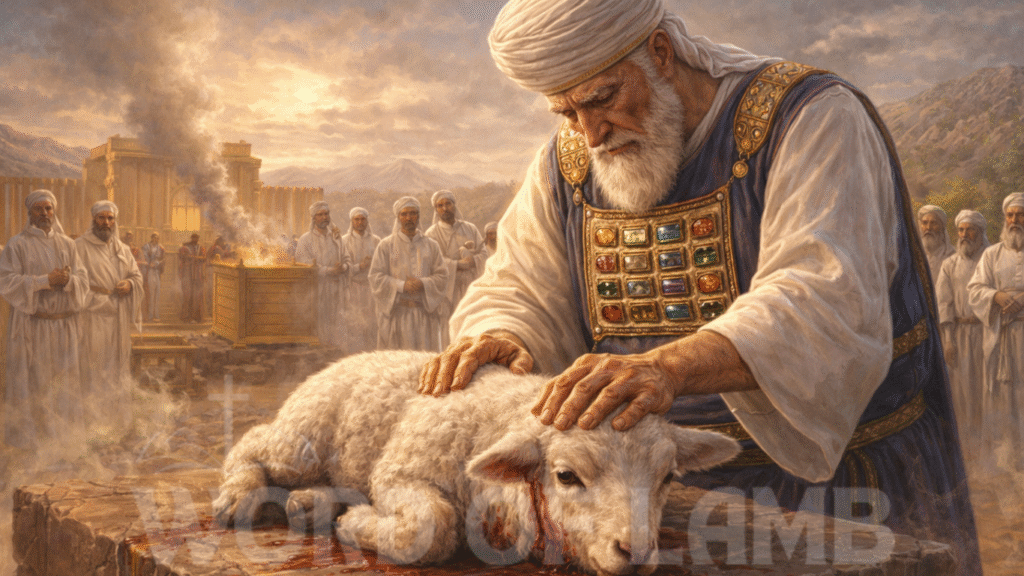
The Lamb Led to Slaughter (Isaiah 53:7; 1 Peter 2:23)
A lamb is gentle by nature. It has no weapons, no claws, no horns to harm others. It does not seek revenge or harbor bitterness. Even when its wool is taken, it does not resist. It submits completely to the will of its owner.
Such was the nature of Jesus.
As described in John 1:29, He came as a Lamb led to the slaughter, silent, humble, and obedient. Though rejected, mocked, beaten, and crucified, He did not retaliate. Nails pierced His hands and feet, yet He remained silent.
He had the power to call legions of angels, yet He chose submission. He learned obedience through suffering. His humility led to His exaltation. Therefore, His name is above every name.
This Lamb in 1:29 John teaches us that true victory comes through humility and obedience.
The Lamb Who Takes Away the Sin of the World (John 1:29)
John the Baptist proclaimed:
“Behold the Lamb of God who takes away the sin of the world” (John 1:29). Jesus bore three kinds of burdens on the cross:
- The burden of the world’s sin
- The burden of false accusations
- The physical cross itself
From Adam to the end of time, the weight of all sin was placed upon Him. The Lamb in John 1:29 carried every burden. Scripture says, “Cast your burden on the Lord, and He will sustain you.” God laid upon Him the iniquity of us all.
In Leviticus 16:21–22, the scapegoat carried the sins of the people into the wilderness. Similarly, Jesus carried our sins away completely. Our sickness, our shame, our punishment, all were laid upon Him. He bore them alone, like one treading the winepress in solitude.
When Pilate offered to release Jesus or Barabbas, the crowd chose Barabbas. Why? Because Barabbas bore only his own sins, but Jesus carried the sins of the entire world. In their eyes, Jesus appeared more guilty.
Thus, the Lamb in John 1:29 was rejected so that we could be accepted. Dear beloved, cast your burdens, your sins, your pain, your struggles, upon Him. The peace that comes from the Lamb of God in John 1:29 will fill your heart.
The Lamb That Appeared Slain (Revelation 5:6) (John 1:29)
John wept because no one was found worthy to open the scroll. But one of the elders said, “Do not weep! The Lion of the tribe of Judah has triumphed.”
Yet when John looked, he saw a Lamb as though it had been slain. This reveals a deep truth. The Lamb continues to bear the marks of sacrifice. Every time humanity falls into sin, it is as though His wounds are reopened.
Even after His resurrection, when Thomas doubted, Jesus invited him to touch His wounds. The Lamb in John 1:29 remains a symbol of eternal sacrifice. As long as sin exists, His sacrifice speaks. Like a mother who repeatedly cleans her child, God continues to cleanse us through the blood of the Lamb.
1 John 1:7 says His blood continually purifies us. Therefore, do not return to sin. Do not wound the heart of the Lamb again. Come near to His wounds and experience His love, protection, and cleansing. The grace of the Lamb in John 1:29 is sufficient for you.
May the Lamb of God, who takes away the sin of the world ( 1:29 John ), grant you grace, peace, cleansing, and eternal life. Amen.